
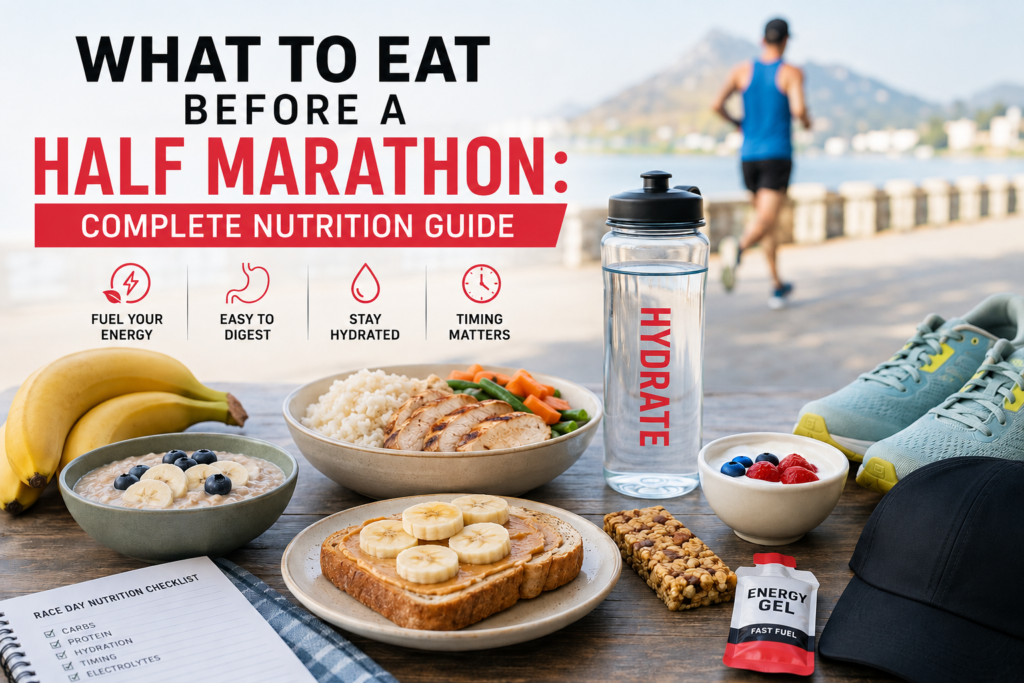
When you are running for a marathon training in Jaipur, you may have mastered your mileage and your long runs, but the key area that you might miss is nutrition—until race week panic sets in. What you eat the days before and hours before your race can mean the difference between a good race and a lousy race at the 15km mark. The complete guide to eating right to fuel your life the right way.
The Week Before—Build Your Glycogen Stores
Your fuel in a half marathon is glycogen, which is stored in your muscles. After three to four days of this, begin to slowly add back in carbohydrates and moderate fat and fiber to prevent digestive discomfort. Good options include:
- Rice, pastas, and potatoes
- Oats, whole-grain bread.
- Bananas and fruits that are easily digested!
- Eat lean proteins such as fish, chicken, or paneer in moderation.
No new foods this week. Race week is no time for a new diet craze, even if it’s a healthy one you’ve seen on social media.
The Night Before: Keep It Familiar and Balanced
The good old “pasta party” isn’t only tradition; it’s effective. A low-carb, light-protein, low-fat, and low-fiber dinner gets you a good night’s rest. Opt for grilled chicken and rice or dal and roti.
Hydration is a key component here as well. Drink water throughout the evening, rather than binging on it before retiring to bed, and use a pinch of salt in your water if you sweat a lot.
Race Morning: Timing Is Everything
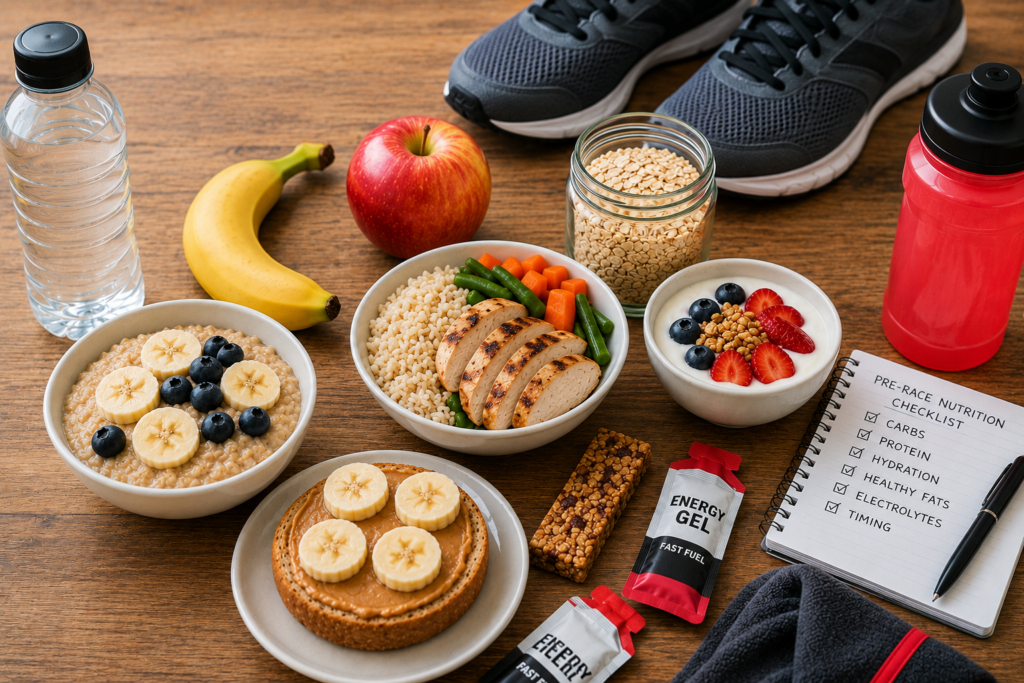
Have a pre-race meal 2-3 hours before the race. This allows your body to digest and still not feel hungry. The following items are an example of a good pre-race meal:
- Brush with honey or jam
- A banana
- Small bowl of oatmeal
- Coffee: If you drink a cup of coffee or tea, have that drink.
If you are a runner who starts early (most local ones do—and the popular Morning Running Group Jaipur meets are no exception), you may only be able to eat a small snack, not a full meal. If so, then a banana and some electrolyte fluids about 45 minutes prior to the start are also effective.
During the Race: Fueling for the Distance
For most runners, a half marathon doesn’t require extensive mid-race fueling, but if you’re running for longer than 90 minutes, a small energy gel or a few sips of a sports drink around the 8–10 km mark can help maintain energy levels. Practice this during training runs first — race day is never the time to try something new.
What to Avoid?
- Eating high-fiber foods just before the race, leading to cramps.
- Too much caffeine (if you normally drink more, your amount needs to be adjusted)
- Do not drink alcohol the night before your test.
- Any supplement or “miracle” product that is new to them prior to the race
CONCLUSION
There are a lot of great ways to get the best results from your race-day nutrition plan, and one of the best is to ask people who have already done everything you can to avoid making any of the mistakes. In most groups you might find individuals who are eager to share their experiences of what worked and what didn’t on their own training cycles, and many groups such as Pink City Runners exist. If you are planning to conquer that finish line, combined with consistent marathon training in Jaipur, you need to make smart nutritional choices as well.
Remember, race-day nutrition is not about perfection—it’s about being familiar, timing it right, and providing your body with the fuel it has months of training to harness